
A Track Through Time – The Story Behind ESM, from 1920 to the Present Day
By Armen Kanikanian
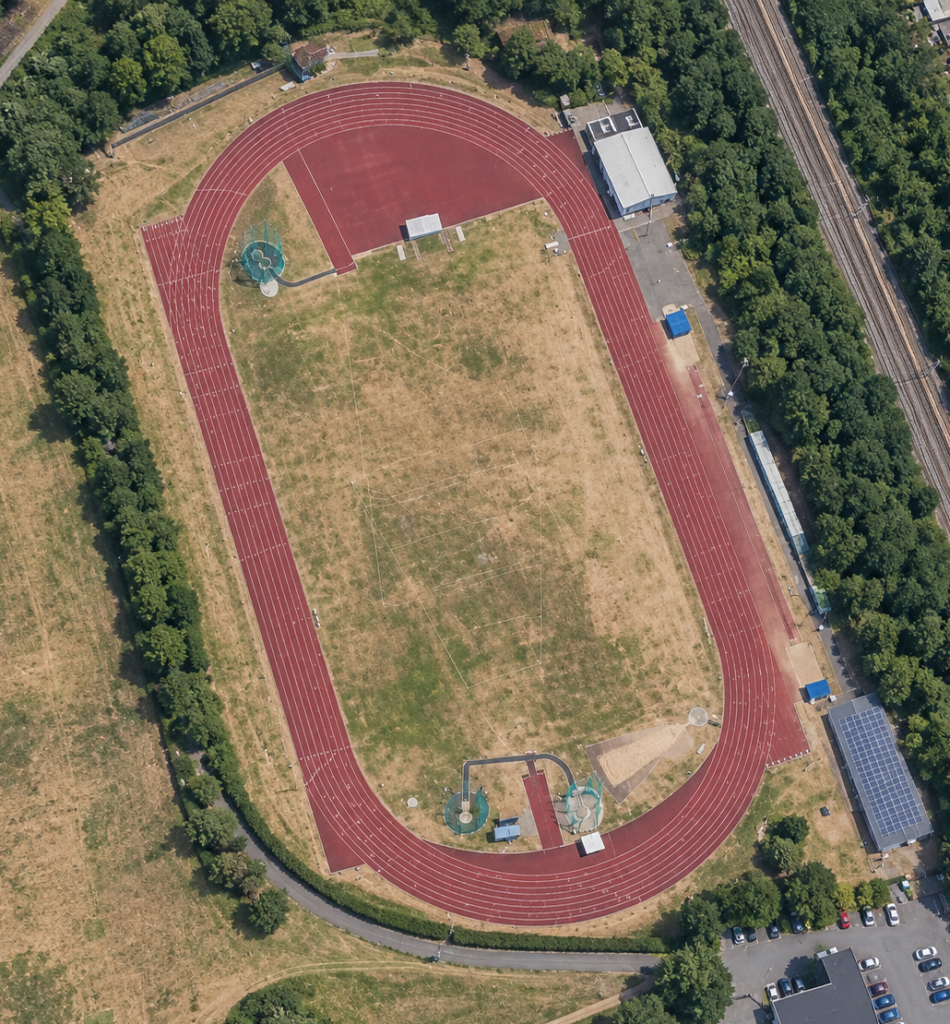
There are athletics tracks all over London, but for ESM, there is only one that feels like home – Perivale Athletics Track.
On an ordinary evening, as daylight begins to fade and runners arrive, the track gradually comes to life. The floodlights come on – well, the ones that still work – and runners gather, chat and begin warming up for the session ahead.
It’s a familiar scene at a track that has been bringing athletes together since 1987. But the story behind ESM stretches back much further. When the club first began taking shape, Perivale Athletics Track didn’t exist, nor did ESM. There were no modern facilities – just a group of people, a love of athletics and the foundations of a club that would evolve considerably over the next century.
In the beginning
The story begins in 1920, when members of the United Services Club, a boxing and running club, decided to form Ealing and Hanwell United Services Harriers. The club was based at the Northfields Searchlight Station (a hut in Elthorne Park). It was initially supported by funds left over from wartime canteen activities, and its early members included First World War veterans.
One of the driving forces was James Morant, a founder member who was also an amateur boxer of some distinction. The club was already growing rapidly, with membership increasing considerably by 1921.
At the AGM in February 1924, the club changed its name to Ealing and Hanwell Harriers. Oswald Mosley, MP for Harrow, also became associated with the club as its president and took part in prize presentations alongside Lady Cynthia Mosley. The club’s base subsequently moved to the bowls club behind the Park Hotel.
But the early history wasn’t entirely smooth. Differences over the club’s headquarters led to a split in 1925, resulting in two separate clubs: Hanwell Town Harriers, based at Park Farm, and Ealing Harriers, which trained at Ealing Common’s grass track.
Following the split, Ealing Harriers’ identity was reflected in its colours. The vest featured dark blue and light blue wings as a badge on the chest. In 1928, the kit changed again: the vest was emerald green, ringed with red, while the white shorts were edged in red and green. The badge was the Ealing Town Arms.
Away from the kit and club identity, training conditions at Ealing Common presented their own challenges. Dogs and children darting in and out among the runners caused considerable inconvenience, making it far from an ideal place to train.
But the club was determined to find somewhere more suitable. By the late 1920s, James Morant was instrumental in persuading the Council to construct a cinder track at Drayton Green. With five lanes, it was a significant improvement in the club’s training facilities and became an important venue for its athletes.
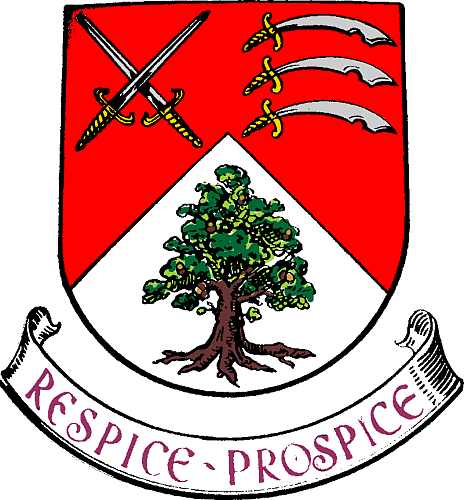
The coat of arms above belonged to the former Municipal Borough of Ealing and dates from 1902. The design changed in 1965, when the London Borough of Ealing was formed through the amalgamation of Ealing, Acton and Southall. ESM’s current badge closely resembles the 1965 design, with the oak tree remaining a familiar feature and a reminder of the club’s historical links with Ealing.
Growing into something bigger
The 1930s saw the club’s ambitions grow. International athletes began appearing in its ranks. League matches and trophy meetings also became an increasingly important part of club life. Among the early names was Eddie Toms, an Olympic bronze medallist who represented Great Britain in the 4 × 400 relay at the 1924 Paris Olympics. Another was Les Edwards, who later competed in the steeplechase at international level and became president of the English Cross Country Union.
There were also international tours and competitions, adding new dimensions to club life beyond the training sessions and races.
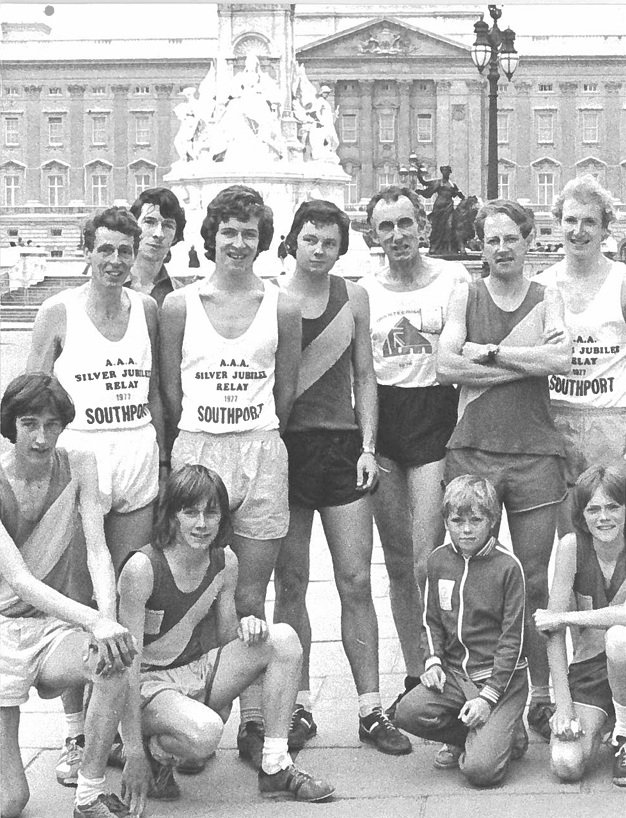
Meanwhile, Southall A.C. was developing its own athletics tradition. Founded in 1931, the club quickly established itself as a serious force, with facilities of its own.
Keeping the club alive
In 1940, Ealing Harriers became dormant as many of its athletes joined the armed forces. Then, in 1946, a small notice appeared in the Middlesex County Times and Gazette, calling on former Harriers to meet at the Park Hotel.
Eight people turned up. Among them was R. A. Jewkes (Ron), who became Track Captain from 1946 to 1951. The club was back.
Ron was a sprinter, yet that didn’t stop him persuading fellow sprinters to turn out for cross-country races as part of their training. He later coached international athletes before becoming an international starter.
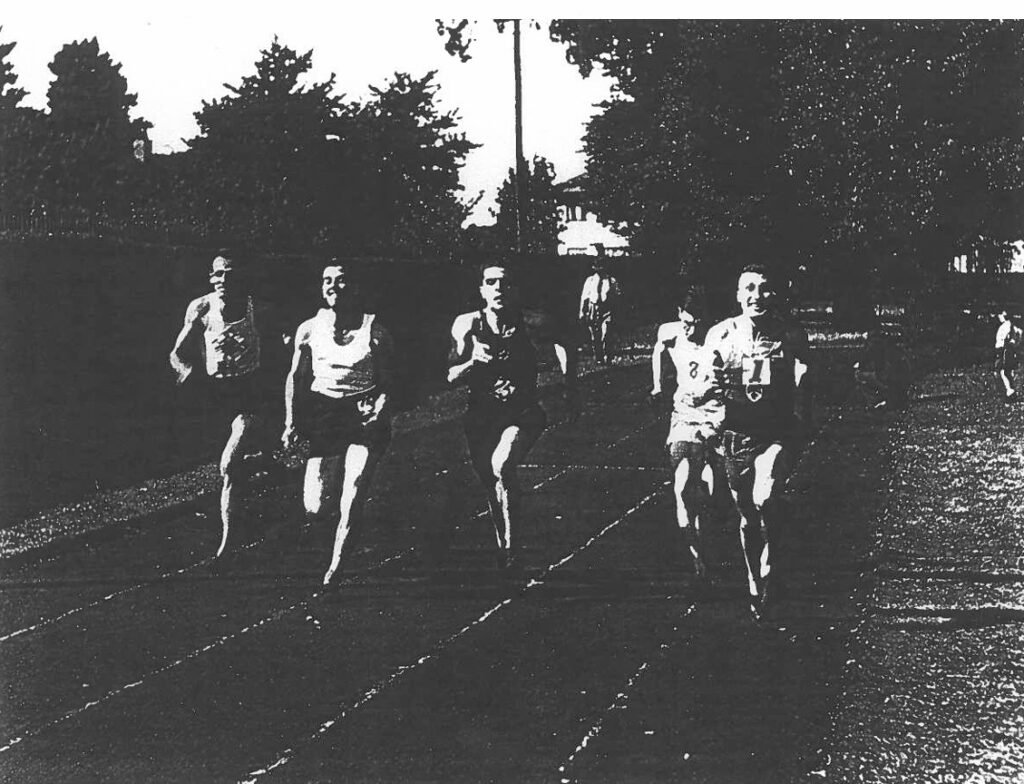
The club was once again building itself up from a small group. And it wasn’t long before Ealing and Southall were making their mark on the international stage. At the 1948 Olympic Games, both clubs provided torchbearers. Bert Blaney for Ealing Harriers and Dennis Ketteridge for Southall.
Then came another remarkable moment. In 1951, Cyril Box, an active member of the club, organised what is believed to have been the world’s first cross-country relay. The BBC attended the inaugural event. The course initially used both sides of Horsenden Hill, but was later changed because runners had to cross a road.
Today, the idea of sending runners across a road during a race will almost certainly require a lengthy risk assessment, a road closure and probably a new route being drawn up.
A momentous amalgamation
By the 1960s, both Ealing and Southall had substantial histories of their own. In 1966, the two clubs joined forces to become Ealing & Southall A.C.
The archives describe it as a “momentous amalgamation”, with Alistair Lynn and Tony Helling among those who played important roles in bringing the two organisations together. Three years later, when the Southern League began, Ealing & Southall A.C. found itself in Division 1. It was another significant step in the club’s development, marking just how far it had come since those early meetings in Elthorne Park. But there was another destination ahead.
Welcome to Perivale
In 1987, Perivale Athletics Track opened, with two Olympians officiating at the ceremony – Linford Christie and Tessa Sanderson.
The track has since been part of the story of some exceptional athletes, including Dame Kelly Holmes and Georgia Hunter Bell, both of whom were part of ESM before going on to represent Great Britain at the Olympic Games.
There is an interesting detail in the area surrounding the track. Perivale Maternity Hospital stood next door long before the athletics track was built, having opened in 1937 and closed in 1988. Among ESM’s current coaches is someone who was born there.
My own earliest memory of Perivale Athletics Track goes back to 1993, when I took part in a school sports day. I distinctly remember the track had no railings separating it from Perivale Park, and you could simply wander straight onto it.
ESM arrives
Middlesex Ladies A.C., which had been established in 1923, merged with Ealing & Southall in 1994. And so, Ealing Southall & Middlesex Athletics Club was born.
By this point, the three clubs had built up more than seven decades of athletics history between them. Their merger brought together the traditions and achievements of Ealing, Southall and Middlesex Ladies, creating a new chapter in their shared history.
It was quite satisfying to finally reach the point where ESM had been established. After tracing the club’s journey through all those names, changes and mergers, I had finally arrived at the club we know today.
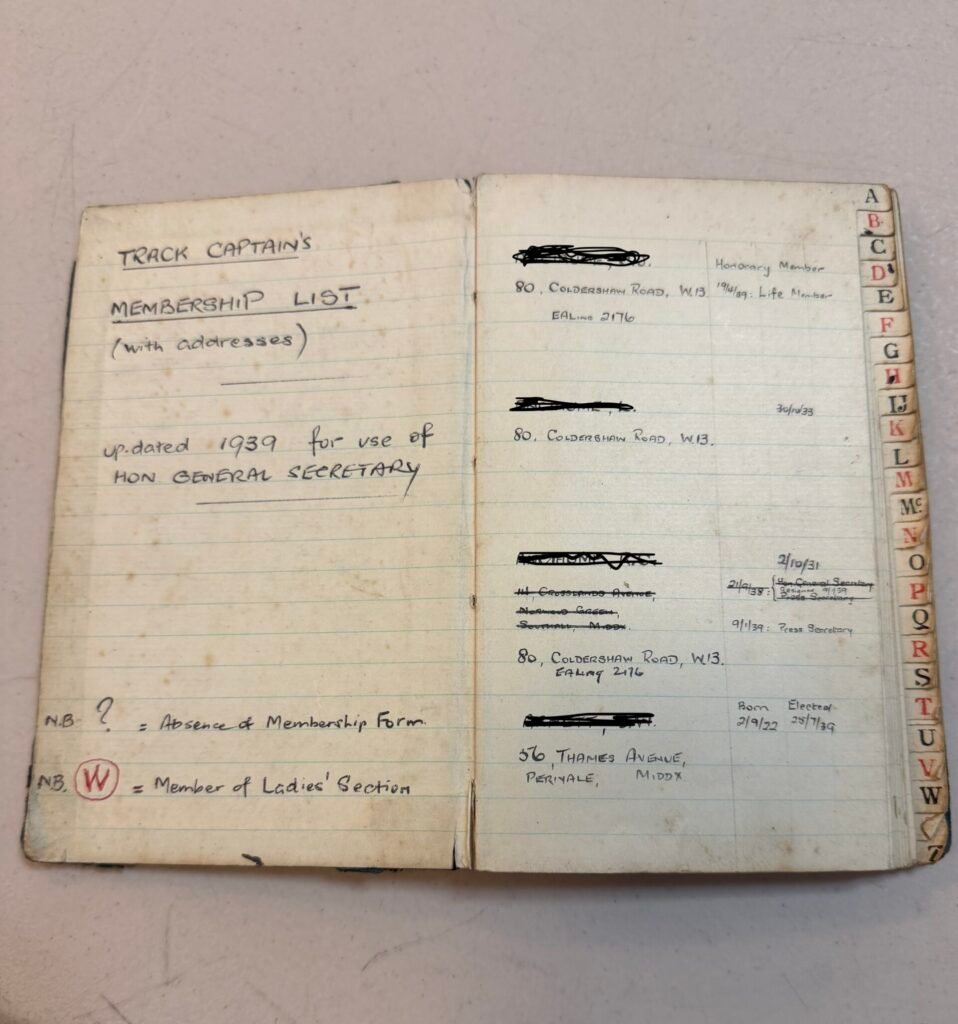
Putting all of this together has been an adventure in itself. I’ve had to go digging through a jumble of old club material. It felt a bit like stepping into a virtual time machine and travelling back through the decades, gathering whatever I could to bring back with me and sift through.
On a later visit to the clubhouse, I found myself looking around the trophy cabinets. Among the displays, I spotted a plaque dedicating the clubhouse to Chris Canton, Club Secretary from 1973 to 1989.
The name immediately rang a bell. I’d read a letter by C. P. Canton to the editor of the ESM newsletter, dated 1994, while looking through the club’s old documents. I wondered whether C. P. Canton might be Chris Canton. I was a little hesitant to assume so, but the connection seemed too good to ignore. I can’t imagine that my potentially mistaken assumption would disrupt the space-time continuum.
So, with the C. P. Canton and Chris Canton connection tentatively settled, here’s that letter to the editor.
Last Saturday I was in Ealing and planned to support the Club at the TVH relays. What a sad day it was! For the first time since I joined in 1962, and probably ever in the 50 years history of the race, the club had no senior team. I could not believe it. What on earth do members want these days? It was local, a sharpener before the London/track/road season, with great spectator appeal. I may be out of date, but I do believe that one of the attractions of our sport is its variety. There is much more than just doing the odd long distance road race, and I hope newcomers to the club can be encouraged to see this and join in more of the traditional events. A relay is also a chance for track and road runners to come together as one club. Put all the training to good use and get as much out of it (before you get too old and decrepit like me) as you can, I say. See everyone at next year’s TVH relay, I hope.
C.P. Canton
While the club has changed enormously over the decades, some things haven’t changed at all – namely, the need to remind athletes to enter races and turn out for the team. These days, such reminders might come in the form of a WhatsApp message, a club email or a word at training to prompt people to get their entries in for cross-country fixtures or road races. The aim, however, remains the same: to get as many club members competing as possible and scoring points for the team. C.P. Canton was making that very point back in 1994, when he felt compelled to put pen to paper and make his feelings known to the editor.
The archives contain a wealth of material, far too much to cover in a single article. The stories and milestones uncovered along the way offer just a glimpse into the club’s rich history. But historical documents tell only part of the story. They cannot capture the nerves before a first race, the relief of finally achieving a personal best, the friendship formed during training or the encouragement that kept someone going when they were ready to give up.
For more than a century, generations of athletes have helped shape ESM’s history. Most will leave no written record, and one day even their names may be forgotten.
But while they were here, they were part of something. And for many, the experience meant more than the results they achieved.